
⭐⭐⭐⭐⭐
Today’s post will be a double feature. I will be reviewing The Exorcist in both of its incarnations, as a novel and movie, followed by a summary of my impressions.
The Exorcist – Novel (1971)
Let’s start at the beginning, with William Peter Blatty’s 1971 novel. It took me entirely too long pick up this book and read it, as I suspect is the case for many who have enjoyed the modern classic that is the 1973 movie. It was a hit in its day, but has largely been forgotten in favor of the more easily accessible film version. This is a shame, because the book is quite rich and entertaining.
Blatty’s style is unpretentious, down to earth and hyper-realistic, yet strangely eloquent and belying the intelligence of the author as he attempts to shape his characters into every-men. Things which are left unsaid or unexplained in the movie are fleshed out in the novel, and many characters take on a deeper, more meaningful dimension. One welcome difference is the importance of Detective Kinderman, who is a bit of a passing character in the movie. In the novel, he is one of four protagonists whose inner thoughts and feelings are expressed, alone with Fr. Karras, Fr. Merrin, and Regan’s mother, Chris MacNeil.

Speaking of Chris MacNeil, she is truly a great mother in the book, and her relationship with Regan is much more established in the novel than in the movie, which makes the trials which their small family endures that much more impactful as the story progresses. Karl, the houseman who is barely a footnote in the film, has a large presence in the novel with his own subplot involving his daughter. All of the characters, no matter how seemingly insignificant, have something to offer and unique motivations, and Blatty’s talent with crafting a coherent world and realistic characters is refreshing. It also adds to the oppressive atmosphere of this horror novel, as the events feel more authentic, like something which could actually happen.
I will say, to those who have a vivid imagination, the novel will be much more disturbing than the movie. It is more graphic and descriptive, and thus much more disquieting than the film, which while putting forth a valiant effort veers into the unreal and cartoonish at times due to the constraints of movie magic when it comes to accurately portraying the horror of something as terrible as demonic possession. While voraciously devouring this book, I had to set it aside at times to take a break during the more lurid portions, which can be very tough to stomach as they involve the sexualization of a child – in even worse ways than the movie is able to touch.
For all of its harrowing moments, there is a deeper current of familial love and faith which hold the story together, making the odyssey into madness worth the journey. The unwavering love of the long suffering Chris MacNiel for her daughter, the protective actions of the priests in the book during Regan’s darkest hours, and the questions about God and our ties to those we love help to soften the blow of the worst the novel has to offer.
For all of the philosophizing about the darkness of human nature throughout the book, one is left ultimately with the feeling that good always finds a way to win out in the end – in spite of the best efforts of monsters and men.
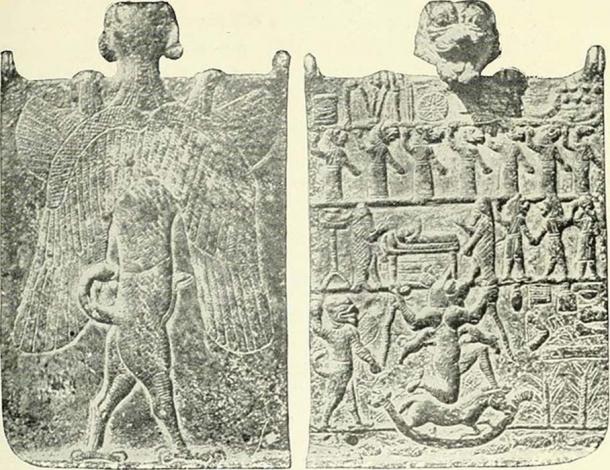
The Exorcist – Movie (1973)
It is not by accident that The Exorcist became one of the most iconic horror classics practically overnight upon its release. Cinema goers had regained a taste for darker films, and built on the back of a great novel and with a screenplay written by Mr. Blatty himself – plus the unique touches of director William Friedkin to set the stage – the film was sure to be a success.
The excellent performances in this film help to sell the nightmarish, yet oddly believable, world. I am very impressed by Blatty’s ability to convey the same sort of feel through his screenplay which one takes away from his novel, of the otherworldly intruding into people’s everyday life in ways they least expect.
On a personal level, this movie has always held a place in my heart. It was one of the first “grown up” horror movies I watched (still at probably way too young an age as my family was rather blasé about the sort of movies we were permitted to watch) and bonded with my family over. I have an iron constitution when it comes to horror, so while this movie didn’t exactly horrify me, I found it to be a very effective human drama that has borne the test of time spectacularly.
From the start in the harsh deserts of Iraq, with dogs snarling and wind howling, to the streets of Georgetown, where autumn has set in and the aged streets and buildings – though outwardly cheerful – the settings carry an ominous weight. This film pulls you in straight away, and the atmosphere takes you right along for the ride, as if the very leaves in the streets were haunted.
As a Catholic, this film is perhaps a bit more impactful for me. It is remarkable for being at once probably one of the most vulgar yet most respectful movies involving Catholicism around, which is a line that is hard to walk but pays off well when it is done correctly. The interplay of the sacred, which often seems to be out of reach for our embattled characters, and profane is pulled off without succumbing to schlock. Would that modern film makers would try harder to hit this balance.
In a way, this film is hard to describe. It’s one that many have seen, and at this stage has become something of a folktale in our culture, one which everyone knows like the back of their hand, and that familiarity ironically causes some difficulty in trying to distill more abstract points or impressions from it. I know that personally, I have seen this movie probably a dozen times, at which stage one has somewhat lost the initial impressions that it once bore. But I think the very fact that I have seen this film so many times is a testament to its power and the enduring legacy it is sure to have on generations to come. Like a fairytale, awesome yet at times horrible, the story will continue to fascinate.

In Summary:
Fans of horror, fans of tales about human character, the religious, the irreligious, and folks of all sorts who enjoy a macabre journey into darker spiritual realms like demonic possession will come away richer for having taken to time to read The Exorcist or watch the film. I heartily recommend that those who have not read the novel do so, as it adds a depth to the movie which will make the further re-viewings that are sure to come more enjoyable.
 The Don Bosco Review